
Safe and Effective Ways to Clean Axminster Carpets
Axminster carpets are valued for their durability, intricate patterns and refined finish, making them a popular choice for hotel ballrooms, corporate lobbies and residential interiors. However, their appearance and performance depend heavily on proper care.
Using the wrong cleaning method can flatten the pile, damage natural fibres or cause colours to bleed. To help protect your carpet, the team at Udani Carpets has prepared this guide with practical tips for safe cleaning and long-term maintenance.
What Makes Axminster Carpets Different From Other Carpets?
Axminster carpets require specialised care because of the way they are made. The pile yarn is interwoven directly into the backing during the weaving process rather than being tufted in afterwards. This construction gives Axminster carpets exceptional dimensional stability and resistance to delamination, while also creating a pile with a defined direction.
Many Axminster carpets are made from a blend of 80% wool and 20% nylon. Wool is naturally resilient, resistant to everyday soiling and able to retain its appearance over time. However, it can be sensitive to harsh chemicals, excessive heat and over-wetting. As a result, cleaning methods suitable for fully synthetic carpets may damage a wool-rich Axminster carpet.
Why Is Routine Vacuuming the Most Important Part of Axminster Carpet Care?
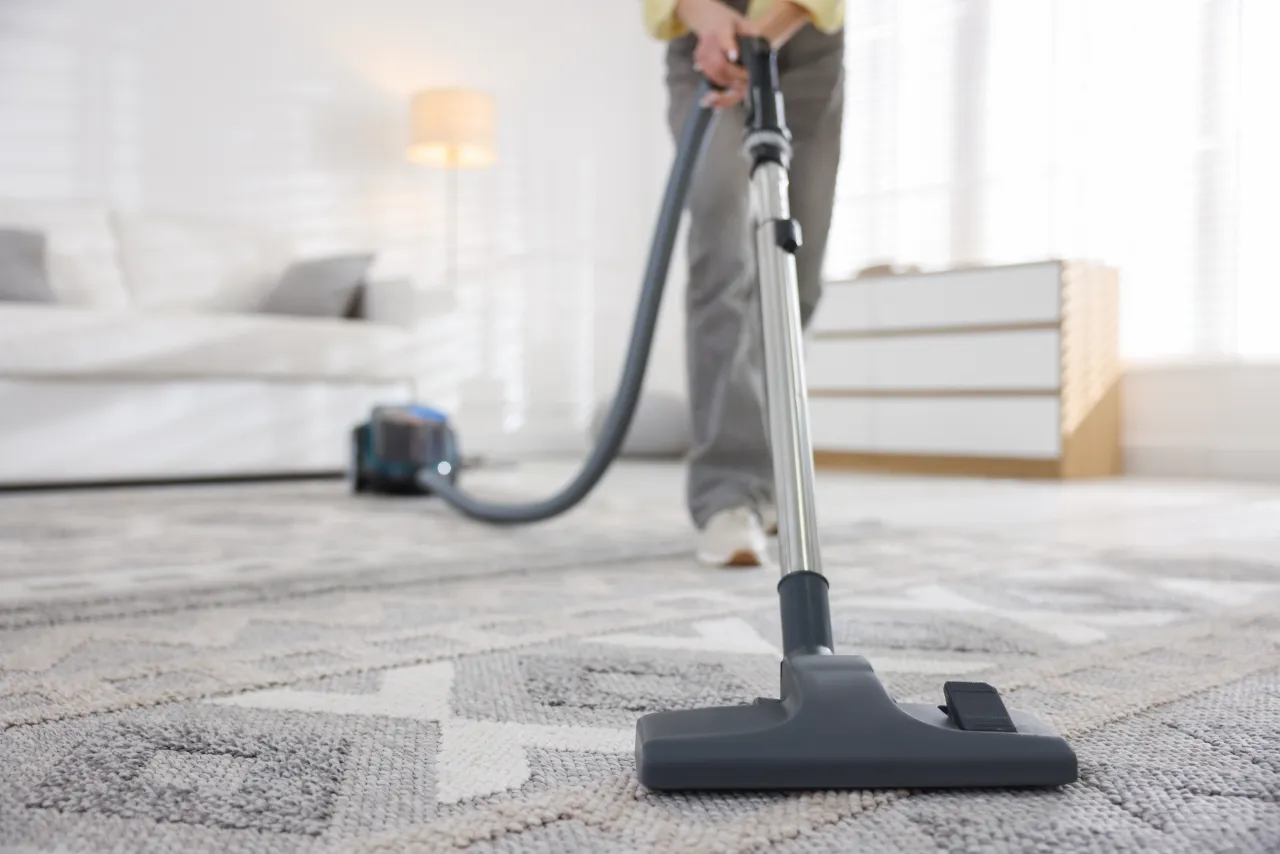
Regular vacuuming is the foundation of effective Axminster carpet maintenance and one of the most effective ways to preserve its appearance and extend its lifespan. Dirt and grit trapped within the pile act as abrasives underfoot, gradually dulling the fibres and causing premature wear. Removing debris before it builds up helps protect both the texture and colour of the carpet.
For effective vacuuming:
- Use a Gentle Vacuum Setting: Choose a suction-only vacuum or set the beater bar to its lowest setting. Strong agitation may disturb the woven pile and cause fuzzing, particularly on wool-rich carpets.
- Vacuum in the Direction of the Pile: Vacuuming with the pile helps reduce fibre stress while lifting dirt more effectively.
- Adjust Vacuuming Frequency: High-traffic areas may require vacuuming daily or several times a week, while lower-traffic areas can usually be maintained with weekly cleaning. The appropriate frequency depends on foot traffic and the environment.
- Clean Around Edges and Under Furniture: Use a crevice attachment to vacuum along skirting boards, beneath furniture and around furniture legs, where dust and debris tend to accumulate.
How Should You Deal With Spills on Axminster Carpets?
Spills can happen at any time, but how quickly you clean them up makes a big difference. The longer a spill stays on the carpet, the deeper it can soak into the fibres and the harder it may be to remove without leaving a stain.
For Liquid Spills
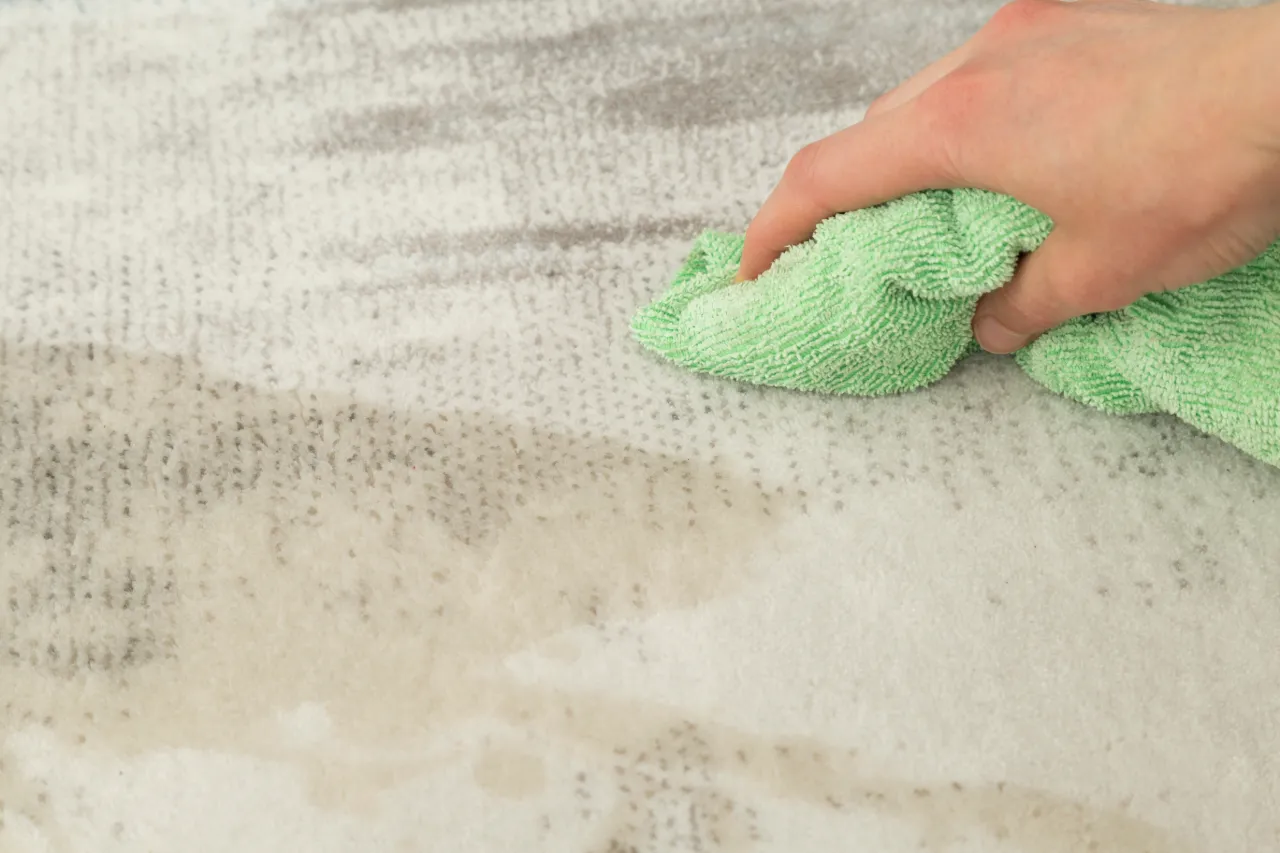
Blot the spill immediately with a clean, dry cloth or plain paper towels. Start from the outer edge and work your way towards the centre so the liquid does not spread further.
Do not rub or scrub the area, as this can push the liquid deeper into the carpet and damage the pile. Keep blotting with a clean part of the cloth until no more liquid comes off.
After absorbing as much of the spill as possible, apply a small amount of cool water and blot again to remove any remaining residue. Avoid using too much water, as soaking the carpet may cause the wool fibres to shrink or lose their shape. Moisture that reaches the backing may also lead to mould or deterioration over time.
For Solid or Semi-Solid Spills
Use a spoon or blunt knife to gently scoop up as much of the spill as possible. Work from the outside towards the centre and avoid pressing the material further into the carpet.
After removing the excess, clean the remaining residue using the same blotting method recommended for liquid spills.
Choosing the Right Cleaning Solution
For most common stains, use cool water mixed with a small amount of pH-neutral carpet shampoo made for wool. Before applying any product, test it on an inconspicuous area of the carpet and allow the test area to dry.
Avoid using the following products on wool-rich Axminster carpets:
- Bleach or Chlorine-Based Cleaners: These can remove the colour and permanently damage the wool fibres.
- Strong Alkaline Cleaners: Products with a high pH may weaken or discolour the carpet.
- Very Hot Water: Excessive heat may cause the fibres to shrink or the colours to run.
- Unapproved Carpet Cleaners: Avoid household or general-purpose cleaning products unless they are specifically recommended for wool carpets, as unsuitable products may damage fibres, affect colour or leave residue.
- Dry-Cleaning Solvents: Use them only when the product is clearly suitable for wool carpets.
When Should Axminster Carpets Be Deep Cleaned?
Regular vacuuming and prompt stain removal address most everyday cleaning needs, but Axminster carpets still benefit from periodic deep cleaning. This removes embedded dirt, restores the pile and helps maintain the carpet’s appearance.
For homes, professional deep cleaning is generally recommended once a year. Commercial and high-traffic spaces may require more frequent cleaning, depending on usage.
Hot Water Extraction (Steam Cleaning)
Hot water extraction, commonly known as steam cleaning, is an effective method for deep-cleaning woven carpets when carried out correctly. The machine sprays a controlled amount of warm water and cleaning solution into the pile before immediately extracting the loosened dirt and moisture.
Moisture levels must be carefully controlled. Over-wetting can leave wool fibres damp for too long, increasing the risk of mildew, unpleasant odours and backing damage. Professional cleaners should use appropriate equipment and controlled moisture levels, followed by thorough extraction and adequate ventilation to promote faster drying.
Dry Compound Cleaning
Dry compound cleaning is a practical low-moisture option, particularly for busy commercial spaces or Malaysia’s humid climate.
A slightly damp cleaning compound is worked into the pile using counter-rotating brushes. As it passes through the fibres, it absorbs dirt before being vacuumed away once dry.
Because the carpet requires little to no drying time, this method is well suited to hotels, offices and other commercial environments where downtime must be kept to a minimum.
What Should You Avoid When Cleaning Axminster Carpets?
To protect the appearance and lifespan of your Axminster carpet, avoid the following cleaning mistakes:
- Over-Wetting the Carpet: Using too much water during spot cleaning or deep cleaning can lead to shrinkage, distortion, mould and damage to the backing.
- Rubbing or Scrubbing Stains: Aggressive cleaning can disturb the woven pile, spread the stain and cause permanent fibre damage.
- Applying Undiluted Products Directly: Always dilute cleaning solutions as instructed and test them on a hidden area before treating a visible spot.
- Leaving Cleaning Residue Behind: Any remaining product can make the carpet feel sticky, attract more dirt and cause the cleaned area to become soiled again more quickly.
- Allowing Prolonged Sun Exposure: Strong, direct sunlight can gradually fade the carpet’s colours, so window coverings or UV-filtering films may be needed in bright rooms or areas with large windows.
When Should You Engage a Professional Carpet Cleaner?
For deep stains, large areas, or high-value Axminster installations, professional cleaning is generally the safest option. A professional carpet cleaner with experience in woven wool carpets will use the appropriate chemistry, moisture level, and technique for the specific construction. This is particularly important for our hotel and commercial event carpet installations, where the scale and value of the carpet make professional servicing essential.
At Udani Carpets, we can advise on recommended cleaning schedules and approved methods for the specific Axminster products we supply and install. Contact our team to discuss the best care approach for your carpet.
Frequently Asked Questions About Cleaning Axminster Carpets
No. Newly installed Axminster carpets generally only require light vacuuming to remove loose fibres left from the manufacturing and installation process. Deep cleaning is usually unnecessary unless the carpet becomes soiled.
Not always. The success of stain removal depends on the type of spill, how quickly it is treated and whether it has penetrated the fibres. Some stains may require professional treatment or leave permanent discolouration.
Yes. Cleaning recommendations may vary depending on the carpet's fibre composition, construction and manufacturer's guidance. Always check the care instructions for your specific carpet where available.
Signs that professional cleaning may be needed include persistent stains, embedded dirt that cannot be removed by vacuuming, lingering odours or a noticeable loss of the carpet's original appearance.
Very hot water should not be used for routine spot cleaning. Professional hot water extraction may be suitable for some Axminster carpets when carried out using appropriate temperatures, wool-safe cleaning solutions and controlled moisture levels. Always follow the carpet manufacturer's cleaning recommendations.
