
How Often Should You Replace Office Carpets?
Office carpet can go unnoticed until it starts to look worn and tired. By then, faded walkways and stubborn stains may have been building up for some time, affecting how staff and visitors perceive the workspace.
There is no fixed deadline for replacing office carpet. The key is to recognise the signs of wear, understand what affects its lifespan and plan a replacement that minimises disruption to daily operations.
How Long Does Office Carpet Typically Last?
Commercial office carpet may last around 5 to 10 years, depending on its quality, foot traffic, installation and maintenance. Carpets in busy corridors and reception areas may show signs of wear sooner, while those in quieter offices can last longer.
To get the most out of your carpet, choose durable fibres and backing suited to the space, and maintain a regular cleaning routine. In Malaysia, humidity and moisture also matter, so spills, leaks and condensation should be addressed promptly to prevent damage.
Signs It’s Time to Replace Your Office Carpet
If your office carpet has widespread wear, stubborn stains, moisture problems or safety issues, it may be time to replace it. Age alone is not a reliable indicator of carpet condition. Look for changes that affect its appearance, durability, hygiene or safety.
Visible Wear and Matting
Flattened or thinning pile along corridors and in front of desks indicates heavy wear. If the carpet remains flat and dull despite regular vacuuming, it may have lost its resilience.
Stubborn Stains and Fading
Stains that persist or return after professional cleaning may have penetrated the backing or damaged the fibres. Fading and an outdated appearance can also make reception areas and meeting rooms look neglected.
Moisture Damage and Persistent Odours
A musty smell that returns after cleaning may indicate trapped moisture or possible mould growth. Investigate and address the source of moisture before deciding whether the affected carpet can be cleaned or needs replacement.
Loose Seams, Frayed Edges and Trip Hazards
Buckling, curling edges, loose threads and uneven flooring transitions can create safety risks. Some problems may be repairable, but widespread damage may justify replacement.
Not every sign means the entire carpet needs replacing. Isolated stains or loose edges may be repairable, while widespread wear, recurring moisture problems or multiple safety concerns can make replacement the more practical option.
Should You Replace the Whole Floor or Just Part of It?
You may not need to replace your entire office carpet. The right approach depends on the carpet type, the extent of the damage and whether cleaning or repairs can restore its condition.
Carpet Tiles: Replace Only What’s Worn
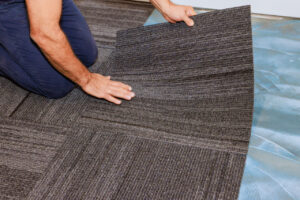
Carpet tiles allow you to replace individual worn or stained sections without disturbing the rest of the floor. This makes them practical for high-traffic offices where damage is often limited to specific areas. Udani Carpets’ office carpet tiles offer this flexibility, and keeping spare tiles from the original order makes future replacements easier.
Broadloom: Assess the Extent of the Damage
Broadloom carpet may require full-area replacement when wear or damage is widespread. Small patches and repairs can address isolated problems, but extensive thinning, rippling or persistent odours may make replacement more practical. Choosing a broadloom carpet suited to your office’s traffic levels can help it withstand daily use.
When Cleaning or Repairs Are Enough
If the carpet is structurally sound, professional cleaning or targeted repairs may be sufficient. Deep cleaning can remove embedded dirt, while repairs can address isolated burns, snags or damaged seams. A professional assessment can help determine whether the fibres and backing remain in good condition or whether replacement is the better option.
How to Plan an Office Carpet Replacement
A well-planned office carpet replacement helps control costs, reduce downtime and avoid unnecessary disruption. Start by assessing the existing floor, then coordinate your carpet selection, budget and installation schedule before work begins.
1. Assess the Floor and Choose the Right Carpet
Identify areas that need replacement and those that can remain. Compare carpet tiles and broadloom based on traffic levels, budget and future maintenance needs.
2. Set a Realistic Budget
Account for the carpet, underlay, removal of the existing flooring, installation and material wastage, rather than comparing prices per square metre alone.
3. Compare Samples and Quotations
Review samples under your office lighting and compare quotations based on the same specifications and scope of work.
4. Schedule Installation Around Operations
Plan work during evenings, weekends or holiday closures, or phase the installation by zone to keep parts of the office operational.
5. Keep Spare Materials for Repairs
Keep spare carpet tiles or suitable broadloom offcuts from the original order where possible. Having matching material available can make future repairs easier, although differences in ageing and wear may still affect the final appearance.
Is Your Office Carpet Due for a Replacement?
Regular office carpet maintenance helps preserve its appearance, extend its lifespan and maintain a clean, professional workspace. However, when wear, stains or damage become widespread, timely replacement can improve the office environment and reduce ongoing maintenance needs.
Whether you need to replace a few worn sections or upgrade the entire floor, choosing the right carpet and planning the work carefully can help you manage costs and minimise downtime. With regular maintenance and timely replacement, your office flooring can remain presentable and functional.
Frequently Asked Questions About Office Carpet
Vacuum regularly, with more frequent cleaning in high-traffic areas. Professional deep cleaning may be needed every 6 to 12 months, depending on foot traffic, soiling, carpet specifications and the manufacturer's maintenance recommendations.
Yes, individual carpet tiles can be replaced without removing the entire floor. This makes repairs quicker and more cost-effective, especially when damage is limited to specific areas.
Repair is usually worthwhile for isolated damage, such as a burn or loose seam. However, widespread wear, persistent odours or rippling may make full replacement more cost-effective than repeated repairs.
